
HardieTrim Boards
Corners, window and door surrounds, band boards, fascia and battens. Trim is a small share of the wall and a large share of how the house looks.

What HardieTrim is
HardieTrim is the fibre cement trim that goes with James Hardie siding. Siding covers the flat parts of a wall. Trim deals with everything else: the outside corners where two walls meet, the frames around windows and doors, the horizontal bands that separate one material from another, the fascia along the roof edge, and the batten strips that turn a flat panel into board-and-batten.
People spend weeks choosing a siding colour and about ten minutes on trim. We’d gently suggest that’s backwards. Stand across the street from a house and squint. What you see is the outline: the corners, the windows, the roofline. That outline is trim. A house with good siding and thin, mean trim looks cheap. A house with ordinary siding and well-proportioned trim looks finished.
Where trim goes on a house
Corners
At every outside corner, the ends of the siding need to stop against something. Corner boards cover those cut ends and give the house a crisp vertical edge. Wider corner boards look more traditional and substantial. Narrow ones, or a metal corner in a matching colour, look more modern.
Windows and doors
Trim around an opening does a practical job, covering the gap between the window frame and the siding, and a visual one, framing the window so it reads from a distance. A common approach is a slightly wider board across the top than down the sides, which gives the window a “head” and looks more settled than four equal strips.
Band boards and frieze
A band board is a horizontal trim piece running across the wall, often at the floor line between storeys or where lap siding changes to shingle in a gable. A frieze board runs along the top of the wall under the soffit. Both give the siding somewhere clean to end.
Fascia
The board along the edge of the roof that the eavestrough hangs from. On many Calgary houses this is wood wrapped in aluminium. Fibre cement fascia is an option when you want a painted, solid look that matches the rest of the trim.
Battens
Narrow strips installed vertically over HardiePanel to create board-and-batten. This is probably where most HardieTrim by length ends up on a modern farmhouse exterior.
Mounting blocks
Exterior lights, outlets, hose bibs, dryer vents and the gas meter all need a flat surface to mount on. On lap siding, that means a trim block behind each one. It’s a small item that’s easy to forget when counting up a job, and there are more of them on a house than you’d guess.
Thickness and widths
HardieTrim boards come in two nominal thicknesses that the trade calls 4/4 (“four-quarter”, about three-quarters of an inch) and 5/4 (“five-quarter”, about one inch). The thicker board stands further proud of the siding, which matters most with lap siding. Where planks overlap, the wall face steps in and out, and trim needs enough thickness to sit in front of the thickest point. Thin trim that ends up flush with or behind the siding looks wrong and can trap water.
Widths run from narrow battens through to wide boards for fascia and bands. Texture is either smooth or a rustic wood grain. Smooth trim with smooth or Cedarmill siding is the most common combination.
You may also hear trim described by product codes such as HZ5 or NT3. These are different formulations James Hardie has sold in different regions and periods. Which trim product is supplied in Alberta, and in which sizes and finishes, is something your estimator should confirm, because it has changed over the years and it affects which warranty applies.
Colour: match or contrast
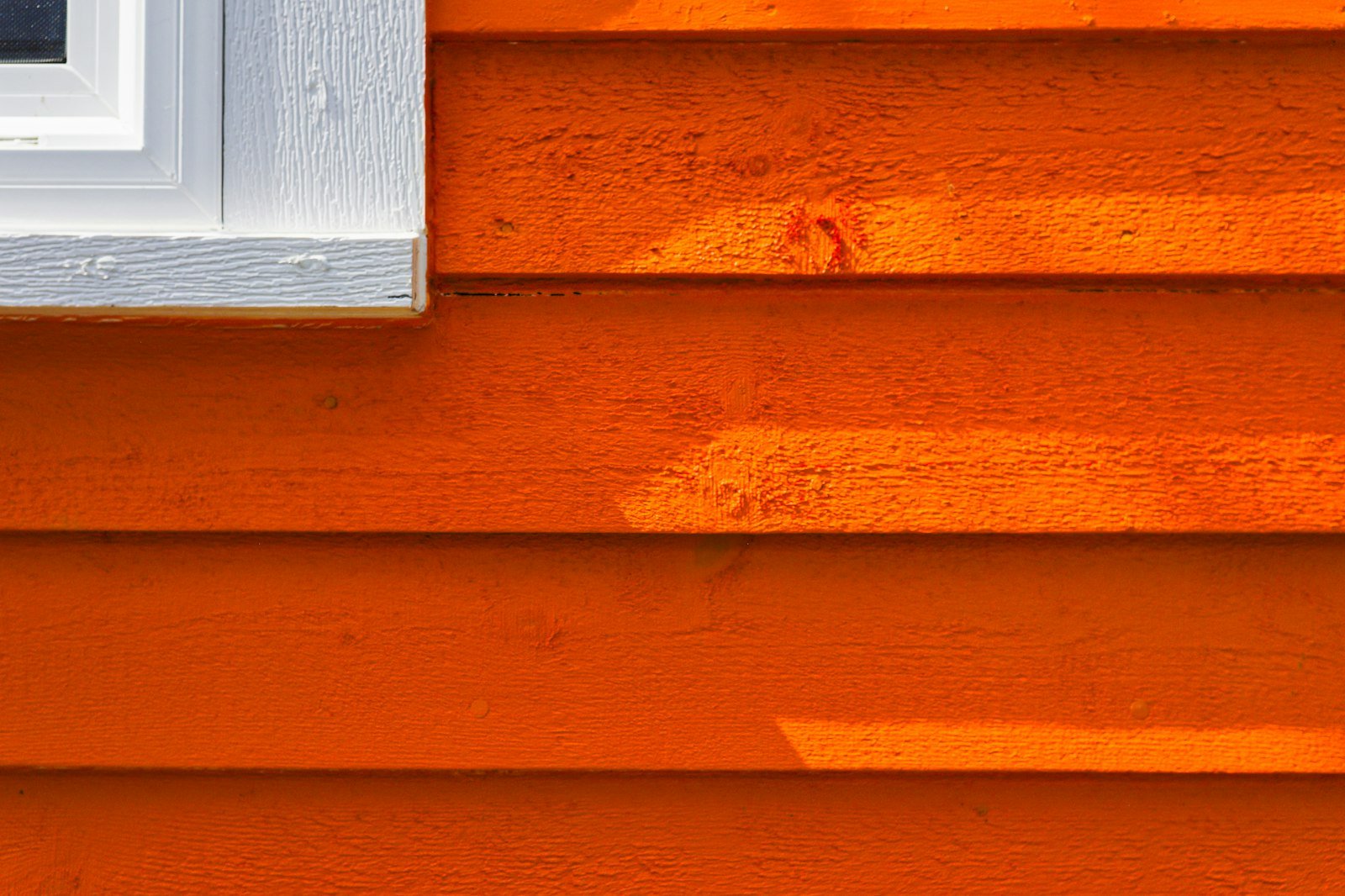
This is the decision that changes the look of the house most.
| Approach | Effect | Suits |
|---|---|---|
| White or light trim on coloured siding | Classic, crisp outlines | Traditional, craftsman and heritage styles |
| Trim matched to the siding | Calm, monolithic, lets the shape of the house lead | Contemporary designs, dark exteriors |
| Dark trim on light siding | Strong, graphic contrast | Modern farmhouse |
| Trim a shade off the siding | Subtle definition without stark lines | Almost anything; a safe middle path |
A practical point: trim colour should be chosen alongside the window frame colour. Black windows with white trim, white windows with dark trim, and trim that matches the windows all read differently. If you’re replacing windows in the same project, decide these together.
HardieTrim is available primed for painting and, in many markets, with a ColorPlus factory finish. Battens on a ColorPlus board-and-batten wall are normally supplied in the matching colour.
How it’s installed
James Hardie’s installation instructions for the specific trim product are the reference. The general approach looks like this.
Trim usually goes on before the siding, so the siding can be cut to butt up against it with a small gap for sealant. Corners and window surrounds are fastened into framing. Because trim boards are thick and dense, fastening is done with finish nails or trim screws suited to fibre cement, and many installers use concealed tabs or brackets so there are no nail heads to fill on the face of a factory-finished board.
Flashing is the part that matters. Any horizontal trim, the head trim over a window or a band board across a wall, creates a ledge. Water running down the wall lands on it. A strip of metal flashing over the top edge, tucked behind the siding above, sends that water back out. Without it, water sits on the trim and finds its way in behind. If you remember one thing from this page, make it this: every horizontal piece of trim should have flashing above it.
Joints between trim and siding are sealed with a good exterior sealant where the instructions call for it. Not every joint should be caulked. Some gaps are left open on purpose so water can drain. A crew that caulks everything in sight, including the bottom of window trim and the underside of flashing, is sealing water in.
Like siding, trim is kept clear of roofs, decks and the ground. Corner boards that run down into the soil or sit on a concrete step stay wet.
Cutting produces the same silica dust as cutting siding, and the same precautions apply.
Why fibre cement trim
The traditional choice for trim is wood, and wood trim is where a lot of exteriors start to fail. The end grain at the bottom of a corner board soaks up water. Paint peels on the sunny side. The mitred corners of a window surround open up. Within ten or fifteen years there’s rot at the bottom of the trim on a house whose siding is otherwise fine.
Fibre cement doesn’t rot and isn’t of interest to insects. It’s non-combustible. It’s dimensionally stable, so joints stay tighter through our temperature swings. And when it’s the same material as the siding, in a finish from the same manufacturer, the whole wall ages at the same rate.
Aluminium-wrapped trim is the other common option in Calgary. It’s inexpensive and low-maintenance, and for fascia in particular it’s often perfectly sensible. Its weakness is hail. Thin aluminium dents, and a dented window wrap can’t be un-dented. It also looks flatter and thinner than a solid board.
How it holds up in Calgary
Trim sits at the most exposed points on a house: the corners that catch the wind, the sills that collect snow, the roofline. The cold-climate HZ5 trim is engineered, like the siding, to resist damage from moisture and freezing. The manufacturer’s trim warranty describes the product as resisting damage from hail.
The weak points in our climate aren’t the boards. They’re the sealant joints, which stretch and compress every time a chinook rolls through, and the flashing, which either was installed or wasn’t. Both are worth a look each spring.
Maintenance
- Rinse trim when you rinse the siding. A garden hose is enough.
- Once a year, check the sealant where trim meets siding and around windows and doors. Re-caulk any joint that has cracked or pulled away.
- Look at the tops of window heads and band boards. If you can see the edge of metal flashing, good. If there’s a bead of caulk there instead, mention it to your installer.
- Keep soil, mulch and snow away from the bottoms of corner boards.
- Touch up chips as the manufacturer directs.
More in the maintenance guide.
Warranty
Trim warranty terms have changed over time. James Hardie’s HZ5 siding and trim warranty dated February 2024 lists trim boards under the same 30-year limited term as the siding. Earlier stand-alone trim warranties were 15 years. Which one applies depends on the product and when it was purchased, so ask your installer for the warranty document that comes with your order. ColorPlus finishes on trim have their own 15-year limited finish warranty. See the warranty page.
Strengths and limitations
| Strengths | Limitations |
|---|---|
| Doesn’t rot at the bottom like wood trim | Costs more than aluminium wrap |
| Solid, substantial look | Heavy; long pieces need careful handling |
| Holds up to hail better than thin metal | Fewer decorative profiles than wood or PVC |
| Matches the siding in material and finish | Needs correct flashing and sealant to perform |
| Non-combustible | Regional product and finish options vary |
What affects the price
Trim is measured by length, not area, and a house can have a surprising amount of it. The number of windows and doors is the biggest factor, followed by the number of corners, whether there are band boards and gable transitions, and whether fascia is included. Board-and-batten multiplies the trim count. Wider and thicker boards cost more than narrow ones. In a quote, look for trim to be listed clearly, with what’s being trimmed and in what size. “Trim as required” doesn’t tell you much. The cost guide has more on reading quotes.
What to ask at your estimate
Trim is where quotes differ the most, usually without anyone saying so. Two prices for the same house can be far apart simply because one includes wide window surrounds and the other doesn’t. Ask these before you compare numbers.
- Which openings are getting trim, and how wide is it on windows, doors and corners?
- Is the trim HardieTrim throughout, or is some of it another material such as metal or wood?
- Is the fascia included, and what is it made of?
- Is the trim ColorPlus or primed and painted on site, and what colour?
- How are the tops of windows and doors being flashed above the trim?
- What happens with the old trim: removed, or wrapped over?
Get the answers written into the quote. It takes ten minutes and it removes most of the surprises that show up halfway through a siding job.
Common questions
Do I have to use HardieTrim with James Hardie siding?
No. Other trim materials can be used. Using the same manufacturer’s trim keeps the material, finish and warranty documentation consistent, which is why most installers recommend it.
How wide should my window trim be?
It depends on the house and window size. Wider trim looks more traditional; narrow trim looks more modern. Ask to see a mock-up on one window before the crew trims them all.
Can trim be a different colour from the siding?
Yes, and it often is. Contrast outlines the house; matching trim lets it recede.
Should fascia be fibre cement too?
It can be. Many Calgary homes use aluminium fascia with good results. Fibre cement fascia gives a heavier, painted look that matches the rest of the trim.
Why is flashing over the window trim so important?
The top of the trim is a ledge that catches water. Flashing directs it back out over the trim. Without it, water can get behind the trim and into the wall.
Will I see nail holes?
On primed trim, nail heads are filled and painted. On factory-finished trim, installers often use hidden fastening or colour-matched fasteners and touch-up.
Can old wood trim be left in place?
Sometimes, if it’s sound. Often it’s the wood trim that has failed, and replacing it with the siding avoids pulling new siding apart later to fix it.
Related products
Trim finishes off HardiePlank, HardiePanel and HardieShingle. At the roofline it meets HardieSoffit. For finish options see ColorPlus Technology.
Products, sizes and finishes offered in Canada change over time. Confirm current availability for the Calgary market with your estimator, and follow James Hardie’s current installation instructions for your product. Tricon is independent of James Hardie.