
HardiePlank Lap Siding
The horizontal plank most people picture when they think of James Hardie. Here’s what it is, how it’s sized, how it goes on a wall, and where it makes sense on a Calgary home.
What HardiePlank is
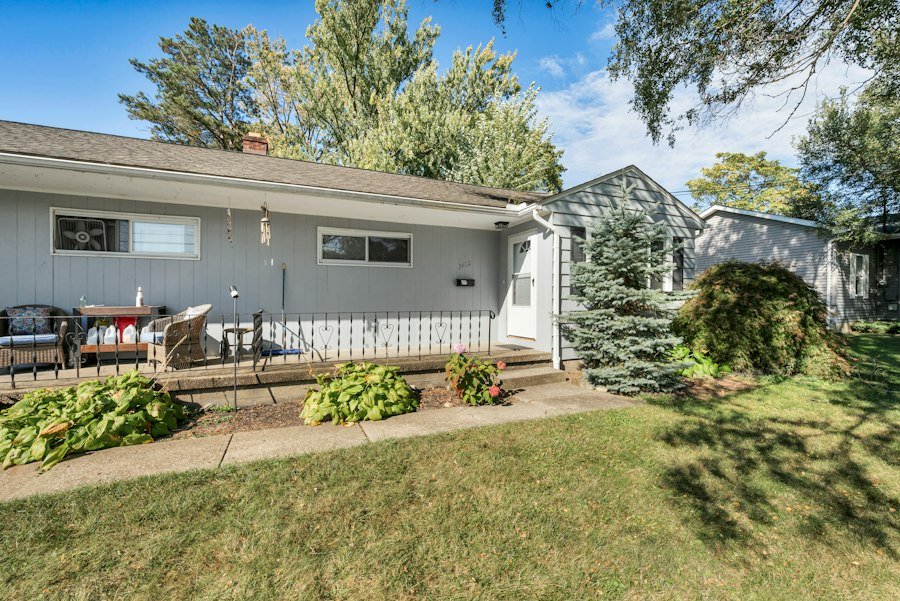
HardiePlank is James Hardie’s lap siding. Long, flat fibre cement boards run horizontally across the wall, and each row overlaps the one below it. That overlap is the “lap”. It sheds water the same way shingles do on a roof, and it’s the reason lap siding has been the default on North American houses for a couple of hundred years. HardiePlank just does it in cement, sand and cellulose fibre instead of wood.
If you’ve driven through a newer Calgary neighbourhood and noticed houses where the siding has a deeper shadow line and a more solid, painted-wood look than the vinyl next door, there’s a good chance you were looking at HardiePlank. It’s the best-selling product James Hardie makes, and on most projects it covers the bulk of the wall area even when panels or shingles are used for accents.
What it looks like
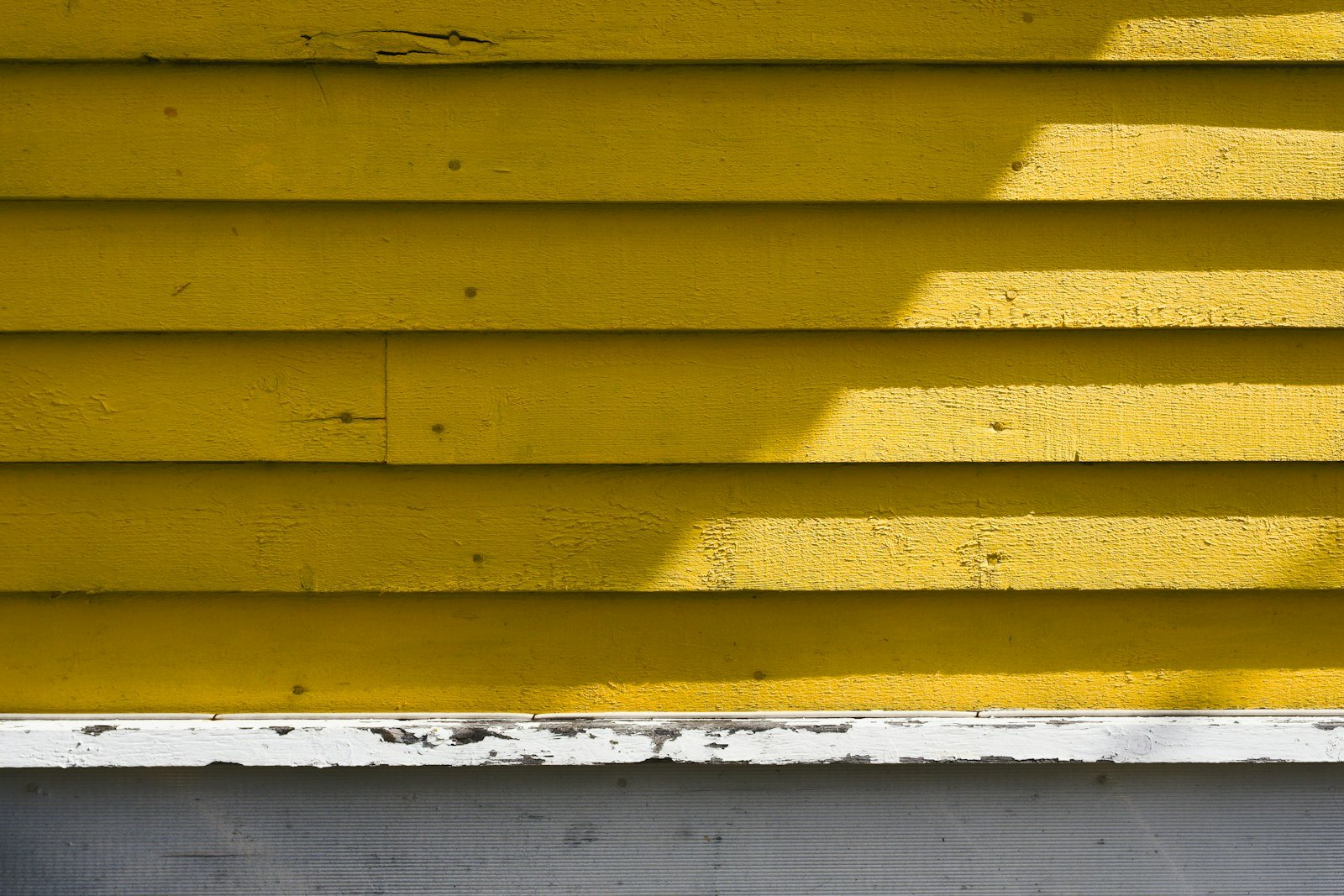
From the street, HardiePlank reads as painted wood clapboard. The boards are thicker than vinyl, so the bottom edge of each course casts a real shadow. That shadow line is most of what people respond to when they say a house “looks more expensive”, even if they can’t put their finger on why.
You get two main surface textures. Smooth is flat and crisp. It suits modern and contemporary designs and looks sharp in darker colours. Select Cedarmill has a wood grain pressed into the face. It’s the more traditional choice and it’s forgiving, because the grain hides dust and small scuffs better than a smooth face does. Neither is better. On a craftsman bungalow in an older part of town, Cedarmill usually looks right. On a flat-roofed infill, smooth usually does.
One thing that surprises people: the grain on Cedarmill is a pattern, not random wood. On a big wall you can sometimes spot the repeat if you go looking for it. Most homeowners never notice, but if you’re particular, look at a full wall of it before you decide, not a hand sample.
Sizes and exposure
HardiePlank comes in 12-foot lengths and several widths. James Hardie’s specification sheet lists widths of 5-1/4, 6-1/4, 7-1/4, 8, 8-1/4, 9-1/4 and 12 inches, with the note that in the HZ5 line the two widest sizes come primed only, not in ColorPlus. Not every width is stocked in every market, so the list a Calgary supplier can actually get you may be shorter.
The number that matters for looks is exposure, which is how much of each board you see once the next one overlaps it. The overlap is about an inch and a quarter, so the exposure is the board width minus that.
| Board width | Approximate exposure | How it reads on the wall |
|---|---|---|
| 5-1/4 in. | 4 in. | Narrow, traditional, lots of lines |
| 6-1/4 in. | 5 in. | Classic clapboard proportions |
| 7-1/4 in. | 6 in. | A middle ground, works on most homes |
| 8-1/4 in. | 7 in. | Wider, calmer, more contemporary |
Width affects cost a little as well. Every board has the same hidden strip at the top where the nails go, so wider boards cover more wall per board and per nail. Narrow exposures use more boards and take more time to hang. It’s not a huge swing, but on a full house it shows up in the quote.
The boards are 5/16 of an inch thick. That sounds thin until you pick one up. Fibre cement is dense, and a 12-foot plank flexes and can snap if it’s carried flat. Crews carry them on edge for that reason.
ColorPlus or primed
HardiePlank is sold two ways. Primed boards arrive with a factory primer and get painted on site after they’re installed. ColorPlus boards arrive with the finish colour already baked on at the plant.
For most Calgary jobs ColorPlus is the easier path. Our painting season is short, and a factory finish means the siding can go up in November without anyone worrying about whether paint will cure. It also comes with its own 15-year limited finish warranty from James Hardie. The trade-off is that you’re choosing from the ColorPlus palette for our region, not from every colour a paint store can mix. If you have your heart set on a specific custom colour, primed and painted is how you get it. We go through that choice in more detail on the ColorPlus page.
Where it works best
Almost anywhere, honestly. Lap siding is the workhorse. A few situations where it’s a particularly good fit:
- Whole-house re-sides. If you’re replacing tired vinyl or failing wood on a typical two-storey, lap siding on the main walls keeps the house looking like it belongs on the street while upgrading the material.
- Homes on the north and west edges of the city. Those areas tend to see the worst hail. The City of Calgary’s climate-ready guidance lists fibre cement among the more resilient siding types for hail and wind.
- Older character homes. A narrow exposure in Cedarmill is about as close as you can get to original wood clapboard without taking on wood’s upkeep.
- Mixed exteriors. Lap siding on the body of the house pairs well with HardieShingle in the gables or a HardiePanel board-and-batten feature at the entry.
Where it’s less ideal: very tall, uninterrupted modern walls sometimes look better in vertical panel, and curved walls are a problem for any rigid board.
How it’s installed
You don’t need to know how to hang siding, but knowing the broad strokes helps you judge a quote and a crew. This is a summary. The actual requirements come from James Hardie’s installation instructions for the HZ5 product, and those are what your installer should be working from.
The wall behind it
Old siding comes off, the sheathing is checked, and a weather-resistive barrier goes over the wall. Windows, doors and anywhere a roof meets a wall get flashed. This layer does the real waterproofing. Siding is the raincoat; the barrier and flashing are the skin.
Starting the first course
A starter strip goes along the bottom so the first plank kicks out at the same angle as every row above it. The bottom of the siding is kept up off the ground, decks, steps and roof surfaces. James Hardie publishes minimum clearances for each of those, and they matter here. Snow sits against the base of Calgary walls for months, and siding that touches it stays wet.
Fastening
Most lap siding is “blind nailed”. The nail goes through the top of the board, and the next course covers it, so you don’t see fasteners on the finished wall. Nails need to hit framing or approved sheathing, sit flush and not be overdriven. An overdriven nail has broken through the face of the board and isn’t holding much.
Joints
Where two planks meet end to end on a long wall, the joint lands over a stud and gets a piece of flashing behind it. A good crew staggers those joints so they don’t line up in a column up the wall, and keeps them away from the most visible spots, like beside the front door.
Cutting
Cutting fibre cement makes dust that contains silica, which you don’t want to breathe. Professional crews use shears, score-and-snap tools, or saws with dust collection, and they cut outdoors and downwind. If you see a crew dry-cutting with an ordinary circular saw in a cloud of dust beside your open windows, that tells you something about how carefully the rest of the job is being done.
Edges and touch-up
Field-cut ends are sealed as the manufacturer directs, and small nicks in a ColorPlus finish are touched up with the matching product. The touch-up is for nicks. It isn’t meant for painting over large areas, and a wall full of touch-up dabs is a sign boards were handled roughly.
How it holds up in Calgary
The HZ5 version of HardiePlank is the one sold for the northern United States and Canada. James Hardie engineers it to resist shrinking, swelling and cracking through wet and freezing conditions. In its product catalogue the company also describes the HZ5 lap siding profile as having a sloped top edge and a drip edge to help water drain off the board.
That lines up with what our weather actually does. We don’t get much steady rain, but we do get snow that melts in a chinook and refreezes that night, over and over, from October to April. Materials that soak up water suffer in that cycle.
On hail: James Hardie’s warranty describes the product as resisting damage from hail, and fibre cement has a good reputation after Calgary storms compared with standard vinyl. It is still possible for very large hail to chip paint or crack a board. And the same warranty excludes damage from severe weather events, so a bad storm is a conversation with your insurer, not the manufacturer. We’d rather you hear that from us now than discover it later.
On fire: fibre cement is non-combustible. It won’t ignite from direct flame or add fuel to a fire, which is one reason it shows up on lists of wildfire-resilient materials.
Maintenance
There isn’t much. Rinse the walls with a garden hose once or twice a year. Use a soft brush on anything stubborn. Don’t use a pressure washer up close or acid-based cleaners, because James Hardie’s care guidance says both can damage the surface. Once a year, walk around and look at the caulking at windows, doors and trim, and make sure soil, mulch and stored firewood aren’t piled against the bottom course. The maintenance guide has a fuller checklist.
Warranty
HardiePlank HZ5 lap siding carries James Hardie’s 30-year limited, non-prorated product warranty. A ColorPlus finish has a separate 15-year limited finish warranty. Both are warranties on the product. Neither covers mistakes in how it was put on the wall, which is why your installer’s written workmanship warranty matters just as much. More on the warranty page.
Strengths and limitations
| Strengths | Limitations |
|---|---|
| Real shadow lines and a painted-wood look | Costs more than vinyl, in both material and labour |
| Doesn’t rot; nothing in it for insects or woodpeckers | Heavy and brittle to handle before it’s on the wall |
| Non-combustible | Adds almost no insulation by itself |
| Good hail reputation compared with vinyl | Not hail-proof, and storm damage isn’t a warranty item |
| Factory finish available, so no painting season to wait for | ColorPlus palette is limited to regional colours |
| Suits nearly every house style | Performance depends heavily on correct installation |
What affects the price
We don’t publish a per-square-foot number, because it would be wrong for most houses. What moves the price of a HardiePlank job is the amount of wall, how cut-up that wall is with windows and corners, how tall the house is, what has to be torn off first, what shape the sheathing is in, how much trim there is, and whether you choose ColorPlus or primed. Plank width nudges it too. The cost guide walks through each of those.
Common questions
Can HardiePlank go over my existing siding?
In most replacements the old siding comes off. That lets the installer inspect the sheathing, fix any rot and put on a proper weather barrier and flashing. Whether anything can stay is decided by the manufacturer’s instructions and the condition of the wall, not by what’s quickest.
Smooth or Cedarmill?
It’s a style choice. Smooth looks cleaner and more modern. Cedarmill looks more traditional and hides dust and minor marks a bit better. Look at a full-size sample of each outside before you choose.
Which width should I pick?
Narrower exposures suit older and traditional homes. Wider ones look calmer and more modern. If you’re unsure, the middle sizes are safe on almost any house.
Will I see nails?
Not normally. Lap siding is usually blind nailed, so each course hides the fasteners of the one below.
Does it need painting?
ColorPlus boards come finished. Primed boards need painting after installation. Either way, any painted exterior will eventually need repainting, many years down the road.
How long does installation take?
It depends on the size and shape of the house, the season and what turns up under the old siding. Your written quote should give an expected schedule.
Is it noisy or cold compared with vinyl?
Fibre cement is denser than vinyl, so it doesn’t rattle or flap in the wind. For warmth, what matters is the insulation and air sealing in the wall, not the cladding.
Related products
Most HardiePlank exteriors use HardieTrim at corners and around openings and HardieSoffit under the eaves. For accents, see HardiePanel vertical siding and HardieShingle. If you’re still deciding on colour, start with the colours page.
Sizes, textures and finishes offered in Canada change over time. Confirm current availability for the Calgary market with your estimator, and follow James Hardie’s current installation instructions for your product. Tricon is independent of James Hardie.