
HardieShingle Siding
The look of cedar shakes in fibre cement. Mostly used in gables and as an accent, and one of the easiest ways to give a plain house some character.
What HardieShingle is
HardieShingle is James Hardie’s version of shingle siding. Real cedar shingles are small tapered pieces of wood nailed up in overlapping rows, and they’ve been used on houses for centuries. They look wonderful. They also split, cup, go grey unevenly, feed moss on the shady side, and need re-staining every few years if you want them to keep their colour.
HardieShingle keeps the look and drops most of the upkeep. It’s made of the same fibre cement as the rest of the James Hardie line, moulded with a wood-grain face and shaped so that, once it’s on the wall, it reads as rows of individual shingles.
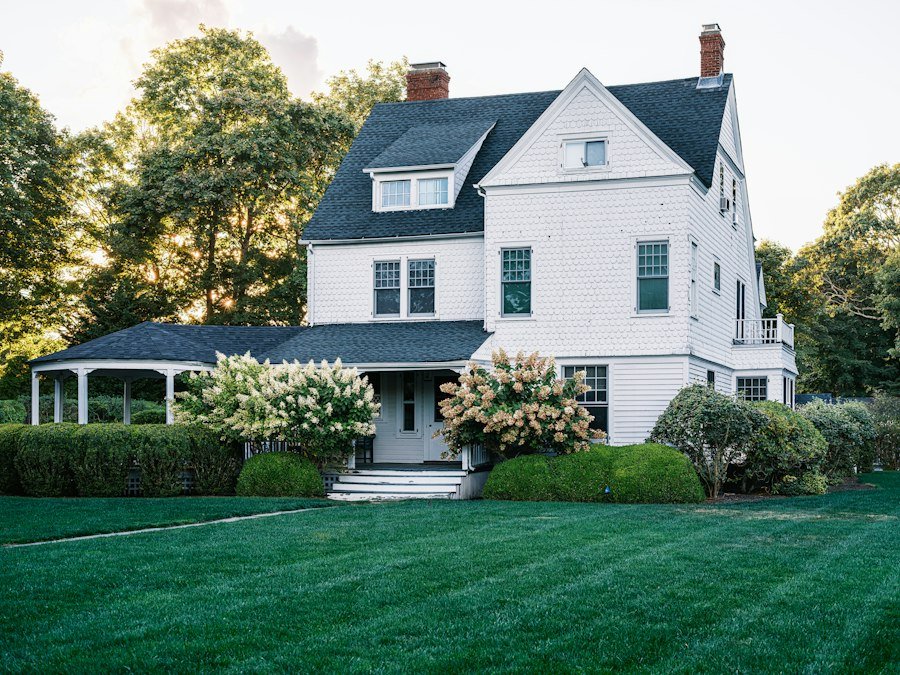
In Calgary it’s rarely used on a whole house. You’ll mostly see it in the triangle of a gable, on a dormer, across the top half of a front elevation, or wrapped around a porch. A few square metres of shingle up high does a lot for a house that would otherwise be one material from foundation to roof.
Straight edge and staggered edge

There are two styles, and they give quite different results.
Straight edge shingles line up along the bottom of each row. You get neat, even horizontal lines with the vertical breaks between shingles adding texture. It’s the tidier, more formal look. It suits craftsman homes, Cape Cod style, and newer houses where the shingle is meant to sit quietly alongside lap siding.
Staggered edge shingles have bottoms at slightly different heights, so the rows look hand-split and irregular. It’s a more rustic, cottage look. On a mountain-style home or a lake cabin it’s exactly right. On a crisp modern farmhouse it can look out of place.
If you’re not sure, straight edge is the safer pick. It goes with more things.
Panels and individual shingles
HardieShingle is made in two forms. Most of what gets installed is the panel: a strip about four feet long with the shingle shapes cut into its lower edge. One panel puts up a whole row of what look like separate shingles in a single piece. It’s much faster to install than individual pieces and keeps the rows straight.
There are also individual shingles in a few different widths. Crews use these to finish around windows and at the ends of rows where a panel won’t fit cleanly, and they can be used for a whole wall when someone wants a truly random pattern. A full wall of individual shingles takes far longer to install, and the labour cost reflects it.
The exact panel dimensions and exposures differ slightly between the straight and staggered versions, and what’s stocked varies by region, so let your estimator confirm the numbers for what’s available in Calgary.
Where it works best
- Gables. The classic use. Lap siding on the walls, shingle in the triangle above. A trim band usually separates the two.
- Dormers. Small, fiddly surfaces where a different texture looks deliberate.
- The upper storey. Shingle above, lap below, with a band board at the floor line. This breaks up a tall two-storey front nicely.
- Front porches and entries. A shingle surround makes an entry feel warmer.
- Bump-outs and bay windows. A change of texture highlights the shape.
- Whole small buildings. A shed, a garden suite or a cabin fully in shingle can look great. A whole large house is a bigger commitment in both cost and style.
It pairs naturally with HardiePlank lap siding, and that combination, lap below and straight-edge shingle in the gables with white trim, is about as timeless as an exterior gets.
Design tips
A few things we’d pass on to anyone planning to use shingle as an accent.
Use it with restraint. One or two shingle areas on a front elevation look considered. Shingle in every gable, on the dormers, around the door and across the garage starts to look like a sample board.
Decide on same colour or contrast. Shingle in the same colour as the lap siding is subtle. The change in texture does the work, and it’s hard to get wrong. A contrasting colour is bolder. A shade or two darker or lighter than the main walls is usually enough.
Mind the transition. Where shingle meets lap siding, there should be a horizontal trim board with flashing above it. That band is part of the design, so its width and colour deserve a moment’s thought. HardieTrim is what’s normally used.
Think about scale. In a small gable, the shingle exposure can look oversized. In a huge one, it can look busy. Looking at photos of similar-sized gables helps more than looking at a hand sample.
How it’s installed
James Hardie’s installation instructions for HardieShingle HZ5 are the authority here. In outline:
The wall is prepared the same way as for any siding. Old cladding off, sheathing inspected and repaired, weather-resistive barrier on, openings flashed. Shingle siding needs a solid, flat nailing surface, so the condition of the sheathing matters.
A starter course goes on at the bottom of the shingle area. Then panels are installed row by row, each overlapping the one below. The vertical joints between panels are offset from row to row. This is the detail that separates a good shingle job from a poor one. If panel ends line up, or fall into a regular stair-step, your eye picks out the pattern and the wall stops looking like individual shingles. A careful installer varies where the joints land.
The keyways, the slots between the shingle shapes, also shouldn’t line up directly above each other from one row to the next. Again, it’s about avoiding visible columns.
Gables bring a lot of angled cuts where the shingles meet the roofline. Each row has to be cut to the slope at both ends, kept the required distance off the roofing, and flashed. That clearance above the shingles on the roof is important and often skimped. Siding that sits right on the roof surface wicks water from every rain and every bit of melting snow.
Fasteners are corrosion-resistant and are placed where the next course will cover them. Cut edges are sealed as directed, and small nicks in a ColorPlus finish are touched up.
All that cutting is why shingle costs more per square foot to install than lap siding, and why it’s mostly used in small doses.
How it holds up in Calgary
HardieShingle is made in the HZ5 formulation for cold climates, engineered to resist the shrinking, swelling and cracking that wet and freezing conditions cause. It’s non-combustible, which real cedar very much isn’t. For anyone replacing old cedar shingles on a house near the city’s edge or backing onto a natural area, that’s a real consideration.
It doesn’t rot and there’s nothing in it for insects. Woodpeckers and flickers, which can be hard on cedar and on some other sidings around here, don’t get anything out of fibre cement.
On hail, the same honest answer as for the rest of the line: the manufacturer’s warranty describes the product as resisting hail damage, fibre cement generally fares well in Calgary storms, and it still isn’t hail-proof. Shingle areas are often high on the house under a roof overhang, so they tend to be more sheltered than the main walls anyway.
One climate note particular to shingle: the textured, overlapping surface holds a little more dust and airborne dirt than a smooth plank. In a dry, windy city that means the gable may look dusty before the rest of the house does. A rinse sorts it out.
Maintenance
Rinse with a garden hose once or twice a year, more for a low wall that catches splash-back. Use a soft brush for anything that doesn’t rinse away. Skip the pressure washer and acid cleaners; James Hardie’s care guidance says they can damage the surface. Check the caulking where the shingle meets trim, and after a big storm have a look at the roofline where shingle meets shingle. The maintenance guide covers the full routine.
Compare that with real cedar, which wants cleaning, treating and re-staining on a regular cycle, and you can see why people make the switch.
Warranty
HardieShingle HZ5 siding falls under James Hardie’s 30-year limited, non-prorated product warranty. If you choose a ColorPlus finish, that has its own 15-year limited finish warranty. As with every product, the manufacturer’s warranty covers the material, not the workmanship. With all the cutting and flashing a shingle gable involves, the installer’s written workmanship warranty is worth reading closely. The warranty page has the details.
Strengths and limitations
| Strengths | Limitations |
|---|---|
| Cedar-shake character without cedar’s upkeep | More labour to install than lap siding |
| Non-combustible, unlike wood shingles | Usually an accent; a full house is costly |
| Doesn’t rot, split or cup | Joint layout takes care to look natural |
| Nothing in it for insects or woodpeckers | Textured surface shows dust a little sooner |
| Two edge styles to suit formal or rustic designs | Up close, it’s a moulded pattern, not real wood |
| Pairs easily with lap and vertical siding | Gable work needs careful roofline flashing |
What affects the price
Shingle is priced by area like any siding, but the labour per square foot is higher. Gables mean angled cuts on every row. Dormers are small and awkward to reach. Transitions need trim and flashing. Using individual shingles instead of panels adds more time again. Because shingle areas are usually small, the total it adds to a project is often modest, but don’t be surprised to see it as its own line in a quote. See the cost guide for what moves siding prices generally.
What to ask at your estimate
Shingle areas are small, so they tend to get one line on a quote and not much discussion. A few questions clear things up before anyone orders material.
- Is the quote for panels, individual shingles, or both, and where is each being used?
- Straight edge or staggered, and can I see a full-size sample of each against my main siding colour?
- How will the bottom of the gable be finished where the shingle meets the lap siding: a band board, a flashing, or both?
- Is the shingle ColorPlus or primed, and if primed, who paints it and when?
- How will the cuts along the roofline be sealed, and how much gap is being left above the shingles on the roof?
None of these are trick questions. An estimator who installs this product regularly will answer them without checking a brochure, and the answers tell you a fair bit about how the rest of the job will go.
Common questions
Does it really look like cedar?
From the street, yes. Up close you can tell it’s a moulded product with a painted finish, not weathered wood. If you want the silvery, uneven look of aged cedar, this isn’t that. If you want the shape and shadow of shingles in a consistent colour, it does it well.
Straight or staggered edge?
Straight edge is tidier and suits most suburban homes. Staggered edge is more rustic and suits cottage, cabin and mountain styles.
Can I do my whole house in it?
You can. It will cost more in labour than lap siding, and on a large house it’s a strong look. Most people use it on parts of the house instead.
I have old cedar shingles. Can they be replaced with HardieShingle?
Yes, that’s a common project. The old shingles come off, the wall is checked and wrapped, and the new siding goes on. Expect the installer to look closely at the sheathing, since old cedar walls sometimes hide moisture damage.
Should the shingle match the main siding colour?
Either works. Matching is subtle and safe. A contrasting shade makes the accent stand out. Look at samples together, outside.
Is it available in ColorPlus?
HardieShingle is offered with ColorPlus finishes in many markets, and primed for painting. Ask for the current Calgary options.
Will birds or squirrels damage it?
There’s nothing in fibre cement for them to eat or easily excavate, which is a real improvement over wood in areas with flickers.
Related products
Shingle is nearly always combined with HardiePlank lap siding or HardiePanel vertical siding on the main walls, with HardieTrim at the transitions and HardieSoffit under the eaves. For finish choices see ColorPlus Technology and the colours page.
Styles, sizes and finishes offered in Canada change over time. Confirm current availability for the Calgary market with your estimator, and follow James Hardie’s current installation instructions for your product. Tricon is independent of James Hardie.